
Reliable Chimney Flue Liner Replacement Nassau County: 2026 Guide for Plainview Residents
Before you call anyone about chimney flue liner replacement Nassau County homeowners should know a few things: what the job actually involves, what a legitimate contractor looks like, and why the lowest quote usually costs you more in the long run. This is a significant repair not a cleaning, not a patch job and in our experience serving Plainview, Hicksville, Syosset, and surrounding Nassau towns, the homeowners who come to us after a bad experience with another contractor almost always say the same thing: “I didn’t know what questions to ask.”
A customer in Plainview reached out to us last winter after getting three quotes that ranged from $1,800 to $6,400 for the same job. She had no idea how to evaluate them. The lowest bidder hadn’t mentioned a permit, the highest hadn’t explained what liner material they were using, and none of them had walked her through what would actually happen on the day of installation. That gap in information is exactly what this guide is designed to close.
What the Job Actually Looks Like — Start to Finish
A flue liner replacement is not something a chimney company can knock out in two hours. For a standard single-story home in Plainview or Westbury, plan on a half to a full day minimum, and that is only if the flue is in manageable condition. The process starts with a camera inspection a proper contractor drops a video camera down the flue before anything else. That footage tells them the liner’s condition, the flue dimensions, and whether there are any obstructions or structural issues that could affect liner selection.
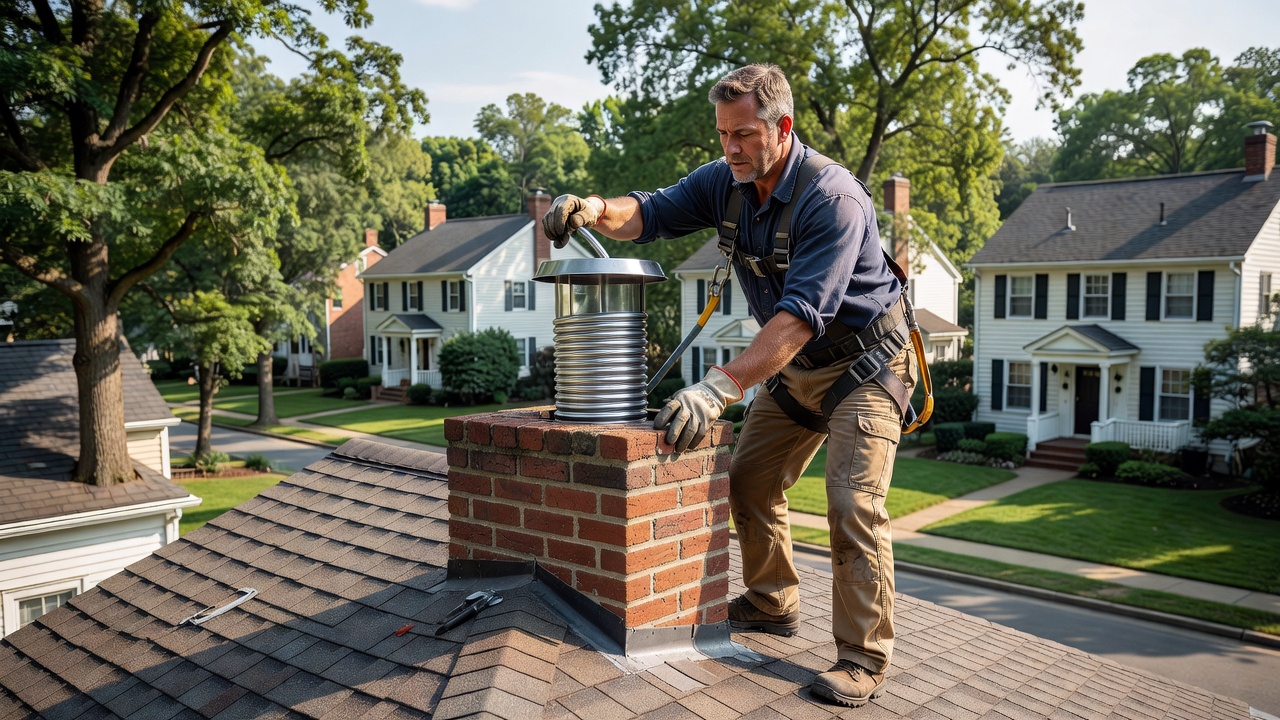
From there, the old liner material (typically clay tile, which cracks and spalls in Long Island’s freeze-thaw cycles) is either broken out or, in the case of a stainless liner installation, left in place as a sleeve. A stainless-steel flexible liner is then lowered from the top of the chimney, connected to the appliance at the bottom, and capped at the crown. The technicians also install a top plate a metal collar that seals the space between the new liner and the old flue and a new chimney cap if one isn’t already there. Insulation wrap around the liner is often recommended for older homes in Merrick or Baldwin where the flue is oversized relative to the appliance, because an insulated liner drafts more efficiently and reduces creosote buildup.
Final steps include a smoke test and a documented inspection. Any contractor who skips the camera work at the start or the smoke test at the end is cutting corners on steps that protect you and your home.
Credentials That Actually Matter When Hiring in Nassau County
The Chimney Safety Institute of America (CSIA) certifies chimney sweeps and technicians through a rigorous exam process. CSIA certification is the baseline credential worth asking about it signals that the person doing the work understands flue liner standards, clearance requirements, and venting codes. The NFPA’s Standard 211 governs how chimneys and venting systems must be built and maintained, and a qualified contractor will reference it naturally when explaining their recommendations, not just when pressed.
Beyond CSIA, verify that the contractor holds a current New York State Home Improvement Contractor license and carries general liability insurance and workers’ compensation. Nassau County requires both. Ask for the certificate of insurance directly not a verbal confirmation and check that it lists your county. A contractor based in Rockville Centre or Great Neck who operates legitimately in Nassau will have no hesitation handing that over.
Membership in the National Chimney Sweep Guild (NCSG) is a secondary marker worth noting, though not a dealbreaker on its own. What matters most is verifiable insurance, a NY State license number you can look up, and documented CSIA training on the crew doing the work not just the owner who answers the phone.
Questions to Ask Before You Commit
Ask these before any money changes hands. A contractor who gets defensive or vague deserves less of your time.
What liner material are you recommending, and why for my specific appliance? Stainless steel is the standard for most gas and oil appliances. A wood-burning fireplace in an older Plainview colonial may have different requirements. The answer should be specific to your situation, not a canned response.
What gauge stainless are you using? For flexible liners, 316L alloy in .006 thickness is the industry standard for gas appliances. Oil appliances typically need .006 gauge 316Ti. If they can’t answer this, walk away.
Will you pull a permit? Liner replacement is a structural alteration under Nassau County building codes and typically requires a permit. If a contractor says permits aren’t necessary, that is a serious red flag — not a cost savings.
Does the quote include a pre-installation camera inspection and a post-installation smoke test? Both should be standard. If they’re listed as add-ons, reconsider.
Who is doing the physical work — your own employees or subcontractors? Many companies in Nassau County subcontract the labor. That isn’t automatically bad, but you need to know who is on your roof and whether they’re covered under the same insurance policy.
What is your warranty on the liner itself, and on your labor? Reputable stainless liner manufacturers offer warranties ranging from 15 years to lifetime, depending on the product line. The contractor should offer a separate labor warranty.
Can you show me the camera footage before we finalize the scope? If they’ve already done a camera inspection, there should be footage to show you. If not, ask why.
Red Flags That Signal a Problem Before the Job Starts
We hear about bad experiences regularly homeowners in Valley Stream, Freeport, and New Hyde Park who paid deposits to contractors who disappeared, or who discovered after the fact that their liner wasn’t properly connected at the appliance. A few patterns come up repeatedly.
Any contractor asking for more than 30 to 40 percent upfront before work begins warrants caution. Full payment before completion is a major warning sign. So is a quote delivered without a site visit flue liner replacement cannot be accurately priced from a phone call. If someone quotes you a flat $1,500 without seeing your chimney, that number is not based on anything real.
Pressure tactics “this price is only good today” or “you need this done before the weekend” are sales techniques, not legitimate urgency. A genuine contractor will give you time to compare.
Also be cautious of any company that recommends liner replacement without showing you the camera footage that justifies it. According to the U.S. Fire Administration, failure to clean and properly maintain chimneys is the leading contributing factor in residential heating fires which means some contractors exploit that fear to oversell work. A cracked clay liner may need relining, but a hairline crack in an otherwise sound liner sometimes only needs monitoring. An honest contractor will tell you the difference.
Comparing Quotes Fairly
The average chimney relining project in the northeastern United States ranges from $2,500 to $7,000 or more depending on flue length and liner material, according to cost data from Angi and HomeAdvisor. In Nassau County, expect quotes on the higher end of that range for full liner replacements, particularly in homes with longer or angled flues, which are common in the split-level and colonial-style homes throughout Plainview, Bethpage, and Massapequa.
When you get multiple quotes, make sure you’re comparing the same scope. Confirm each quote includes: camera inspection, liner material and gauge, top plate, chimney cap, insulation wrap if applicable, permit fees, and labor warranty. A $2,800 quote that excludes permit fees and a cap is not actually cheaper than a $3,400 quote that includes everything it’s just obscuring the real cost.
Long Island’s coastal climate with salt air, freeze-thaw cycles, and high humidity accelerates chimney deterioration faster than inland regions, according to CSIA regional guidance. That’s a real factor in material choice and in how thoroughly the job needs to be done. A contractor who understands Nassau County’s climate and has worked in Plainview-area homes specifically will factor that into their recommendations without needing to be asked.
Ready to Get an Honest Assessment?
If you’re weighing your options for chimney flue liner replacement in Nassau County, our team is happy to start with a camera inspection and give you a written quote with no pressure. We serve Plainview and the surrounding communities from Hicksville and Syosset to Merrick and Bellmore, and we’ll show you the footage and explain our recommendation before you commit to anything. Reach out to Garden City Chimney Service to schedule a visit or take a look at our chimney inspection service if you’re still in the early stages of figuring out what’s actually going on with your flue.
Frequently Asked Questions
How long does chimney flue liner replacement take in a typical Nassau County home?
-
For most homes in Plainview and surrounding Nassau County towns, a stainless steel flexible liner installation takes between four and eight hours, depending on flue length, configuration, and whether any preparatory work is needed. Split-level and two-story colonials with longer or angled flues can run longer. A camera inspection beforehand gives the crew a clearer picture and reduces the chance of surprises on installation day.
Do I need a permit for chimney flue liner replacement in Nassau County?
-
Yes, in most cases. Nassau County building codes treat flue liner replacement as a structural alteration to the home’s venting system, which typically triggers a permit requirement. Your contractor should handle the permit application as part of the job scope if they’re telling you permits aren’t needed to save time or money, that’s worth questioning before you sign anything.
What type of liner is best for an older wood-burning fireplace in Plainview?
-
For a wood-burning fireplace, a rigid or flexible stainless-steel liner typically 316L alloy is the most common recommendation. Cast-in-place liners are another option for chimneys with significant structural irregularities, as they bond to the existing masonry and create a smooth, seamless flue. The right choice depends on the flue’s current condition and dimensions, which is exactly what a pre-installation camera inspection is designed to determine. The CSIA recommends having any chimney inspected before relining to identify conditions that might affect liner selection.
Related from Garden City Chimney Service: About Contact Home – Everything You Need to Know About Garden City Chi · Finding a Trustworthy CSIA Certified Chimney Sweep Nassau County · Reliable and Safe
Pingback: Reliable Chimney Mortar Repair Smithtown NY: 2026 Guide for Plainview Residents – Garden City Chimney Service