
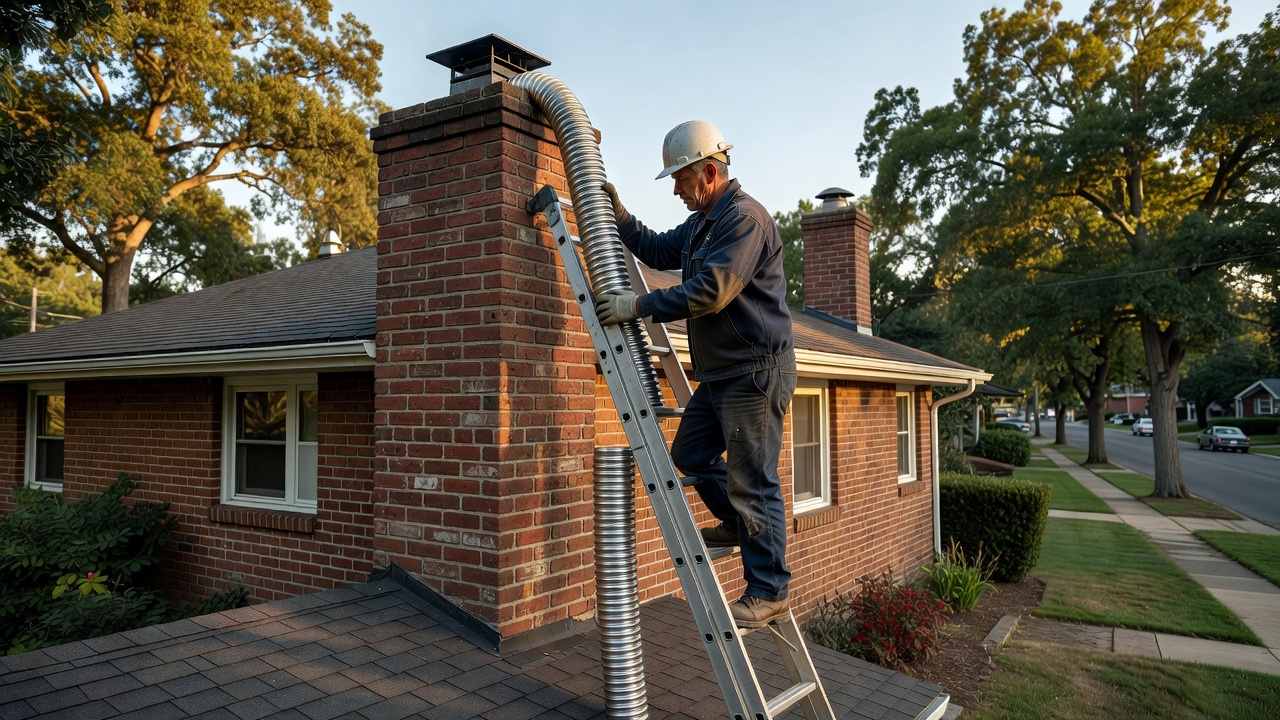
Critical Chimney Relining Long Island NY: 2026 Timing Guide for Valley Stream Residents
Heating fires account for approximately 25% of all residential fires in the United States, and the leading contributing factor is failure to clean and maintain chimneys including deteriorated or missing flue liners. That number carries real weight for homeowners in Valley Stream, where houses built in the 1950s and 1960s were designed around oil-fired systems that have since been converted to gas, often leaving the original clay tile liner intact and unmodified. If you’ve been told you need chimney relining Long Island NY and you’re trying to figure out when to schedule it, the short answer is sooner than you think, and almost certainly not during the window most people choose.
A homeowner on Rockaway Avenue in Valley Stream called us last February after her gas boiler started producing a faint burnt smell in the upstairs hallway. A neighbor assumed it was a furnace issue. It wasn’t. Our inspection found that the original clay tile liner inside her 1958 chimney had fractured along two full sections. Combustion gases including carbon monoxide were venting directly into the chase cavity rather than exiting through the top of the flue. She had been running that system all winter.
That’s not a scheduling inconvenience. That’s a health emergency that developed quietly over months, probably years.
Why Timing Your Liner Replacement Actually Matters Here
Long Island’s coastal climate is genuinely harder on masonry than most homeowners realize. The combination of freeze-thaw cycles, salt air moving inland from the Atlantic and Jamaica Bay, and the high humidity that Valley Stream and neighboring communities like Lynbrook and Rockville Centre see throughout fall and winter accelerates mortar joint deterioration and liner damage far faster than inland regions. According to CSIA regional guidance, Nassau County homeowners face an elevated risk of masonry degradation precisely because of these conditions which means a liner that looks fine in September can be cracked and dangerous by January.
Scheduling chimney relining Long Island NY is not like scheduling a roof cleaning. You’re working around curing times for liner materials, installer availability during the busiest season, and critically whether your heating system can even be safely operated while you wait.
Season by Season: When to Book, When to Wait, When You’re Out of Time
Late Summer (August through mid-September): The Right Window
This is the best time to schedule a relining project on Long Island. Temperatures are warm, which matters because stainless steel liner installation and any associated mortar or refractory work benefits from dry conditions and temperatures above 40°F during curing. More practically, our schedule opens up in August compared to October, when nearly every chimney company on the Island is backlogged. Homeowners in Garden City, Mineola, and Westbury who call us in August routinely get appointments within two weeks. The same call in October often means a six-week wait.
If you had an inspection last spring and were told your liner needed replacement, August is when you act on it — not when the heat kicks on.
Fall (mid-September through November): High-Risk Delay Territory
This is when most people call us, and it’s the most stressful window for everyone involved. Demand spikes sharply after the first cold snap. Homeowners in Hempstead, New Hyde Park, Uniondale, and Valley Stream all reach out around the same two-week period in October, usually after they’ve turned on the heat for the first time and noticed something wrong.
We do our best, but fall scheduling is tight. More importantly, if your liner is already compromised, running your heating system while you wait for a relining appointment is a real risk. Fractured clay tiles allow carbon monoxide and combustion byproducts to migrate into living spaces. Creosote which can ignite at temperatures as low as 451°F according to CSIA consumer guides can accumulate in gaps between liner sections where you’d never see it during a standard cleaning. The danger doesn’t pause while you’re waiting for an appointment slot.
If you call us in October with a cracked or missing liner, our technicians will be honest with you about whether your system should be operated while we coordinate the work.
Winter (December through February): Proceed With Caution
Relining can be completed in winter, and we do it regularly for homeowners in Freeport, Baldwin, and Merrick who don’t have another option. But it comes with real constraints. Refractory mortars used in liner installation have cold-weather limitations. Temperatures below 40°F require material adjustments and extend cure times, which can delay when you can safely fire the system back up. Access to the top of the chimney in icy conditions also adds complexity and, frankly, safety risk for our crews.
If you’re in Valley Stream and facing a winter relining, we’ll get it done. But you’re paying more for it in scheduling difficulty and potential material costs, and the timeline from appointment to completion is longer than it would be in August.
Spring (March through June): A Solid Secondary Window
Spring is underrated for chimney work. The heating season is winding down, which means your system can be safely shut off while we work without leaving you without heat in January temperatures. Scheduling availability improves by April. The NFPA’s Standard 211 requires annual inspections for chimneys, fireplaces, and vents and spring is a natural time to get that inspection done and schedule any relining or repair work identified before the following fall rush.
Homeowners in Great Neck, Hicksville, Bellmore, and Massapequa who schedule spring inspections and follow-up relining work in May or June routinely have a smoother experience shorter timeline, more flexibility on scheduling, and no pressure to rush the job before cold weather arrives.
What Happens When You Wait Too Long
A deteriorated liner doesn’t announce itself. Carbon monoxide is odorless. Creosote buildup in a cracked flue section doesn’t produce visible smoke inside the house until it ignites. The homeowners we talk to after a chimney fire or a carbon monoxide scare almost always say the same thing: there were small signs they attributed to something else. A faint smell. A slightly smoky living room on cold nights. A headache that seemed like a cold.
Delaying chimney relining Long Island NY past the point where your liner is cracked or structurally compromised is not a minor maintenance deferral. It’s operating a venting system that can’t safely contain combustion byproducts. For Valley Stream homeowners with gas or oil heat and most homes here have one or the other that’s a serious, ongoing hazard every time the heat runs.
Our chimney inspection service can confirm the condition of your liner before you commit to a relining project. If you’ve already had an inspection and been told relining is necessary, our chimney repair options cover stainless steel flexible liner installation, cast-in-place liner systems, and associated damper or cap work that often needs to be addressed at the same time.
Schedule Before the Rush Hits
If you’re in Valley Stream or anywhere across Nassau County Floral Park, Garden City Park, Rockville Centre, or beyond and you have any reason to think your flue liner may be compromised, don’t wait until October to find out. Contact Garden City Chimney Service to schedule an inspection or get a straightforward estimate on chimney relining Long Island NY. We’ll tell you what we find, what it costs, and when it genuinely needs to be done no pressure, no upselling on work that can wait.
Frequently Asked Questions About Chimney Relining on Long Island
How much does chimney relining cost on Long Island?
Based on current cost data for the northeastern United States, chimney relining projects typically range from $2,500 to $7,000 or more depending on flue length, liner material, and the condition of the existing chimney structure. Stainless steel flexible liner systems are on the lower end of that range for a single-story flue; cast-in-place systems or multi-story liner replacements on older Long Island homes can run higher. We provide written estimates before any work begins so Valley Stream homeowners know exactly what they’re looking at.
How do I know if my chimney liner needs to be replaced?
A professional chimney inspection using a video camera system is the only reliable way to assess liner condition. Common indicators that relining may be necessary include visible mortar or tile debris in the firebox, a smoky odor in rooms near the flue chase, a carbon monoxide alarm triggering near heating appliances, or an inspection report noting cracked, spalled, or missing tile sections. The CSIA recommends annual inspections for all chimneys and vents in Long Island’s climate, that’s not optional advice.
Can I use my fireplace or furnace while waiting for chimney relining?
This depends on the severity of the liner damage. Minor surface cracks in certain liner types may not immediately prevent use, but a fractured or partially missing liner is a different situation entirely combustion gases including carbon monoxide can escape into living spaces rather than venting safely outside. If your inspection has identified structural liner failure, our technicians will advise you directly on whether operation is safe while we schedule the relining work. In many cases, the honest answer is that the system should not be run until the liner is restored.
Related from Garden City Chimney Service: What Every Buyer Misses · About Contact Home – Everything You Need to Know About Garden City Chi · Honest Chimney Inspection Long Island
Pingback: Straightforward Creosote Removal Long Island Chimney: 2026 Cost Guide for Valley Stream Residents – Garden City Chimney Service