
Don’t Wait for Smoke: Chimney Sweep Rockville Centre NY Warning Signs Every Huntington Homeowner Should Know in 2026
Most people think about getting a chimney sweep when they smell something off or see actual smoke backing into the room. By then, the problem is already costing more than it should. If you’re a homeowner in Huntington or anywhere from Rockville Centre to Merrick the smarter move is recognizing the early signs that your chimney needs professional attention before a $200 sweep turns into a $4,000 repair. Here’s what to actually look for, and what each sign means in plain terms.
A homeowner on New York Avenue in Huntington called us last November after her fireplace started making a low, hollow whistling sound during high winds. She’d been putting off a chimney sweep for two seasons, assuming it was fine since she only used the fireplace occasionally. What we found was a partially collapsed flue tile, a cracked chimney crown, and first-stage creosote buildup thick enough to restrict airflow. The sweep she needed was $195. The liner repair ran considerably more. Timing matters.
What These Signs Actually Mean and Whether to Call Now or Watch It
The NFPA’s Standard 211 requires chimneys, fireplaces, and vents to be inspected at least once a year for soundness, freedom from deposits, and correct clearances. That’s not a suggestion it’s the standard. But between annual inspections, your chimney is telling you things if you know what to listen for.
A smoky smell in the house even when the fireplace isn’t in use
This is stale creosote baking in the flue during warm days, or a draft reversal pulling outside air and odors back down into the living space. It’s more common in summer when the chimney cools and air pressure changes. It’s also one of the cleaner warning signs, meaning you haven’t hit a dangerous buildup yet, but you’re close. Call now. A chimney sweep Rockville Centre NY professionals can confirm whether it’s a draft issue or accumulated deposits.
Black or oily staining around the fireplace opening
Soot streaks or dark, greasy smudges around the firebox or on the facing bricks mean smoke is not exiting cleanly. That points to a partially blocked flue, a damper that’s failing to open fully, or a flue that’s undersized for the fireplace. Cosmetic fixes won’t solve this. Call now.
White staining on the exterior chimney bricks (efflorescence)
That chalky white residue is mineral salt left behind as water moves through the masonry and evaporates. Long Island’s coastal climate the freeze-thaw cycles, the salt air off the Sound accelerates mortar joint deterioration faster than inland areas. According to CSIA regional guidance, Nassau and Suffolk County homeowners face accelerated masonry damage compared to inland regions precisely because of these conditions. Efflorescence is water damage in progress. Watch it for one season, then act but if you also see crumbling mortar, move it to the call-now column.
Visible cracks in the chimney crown or cap
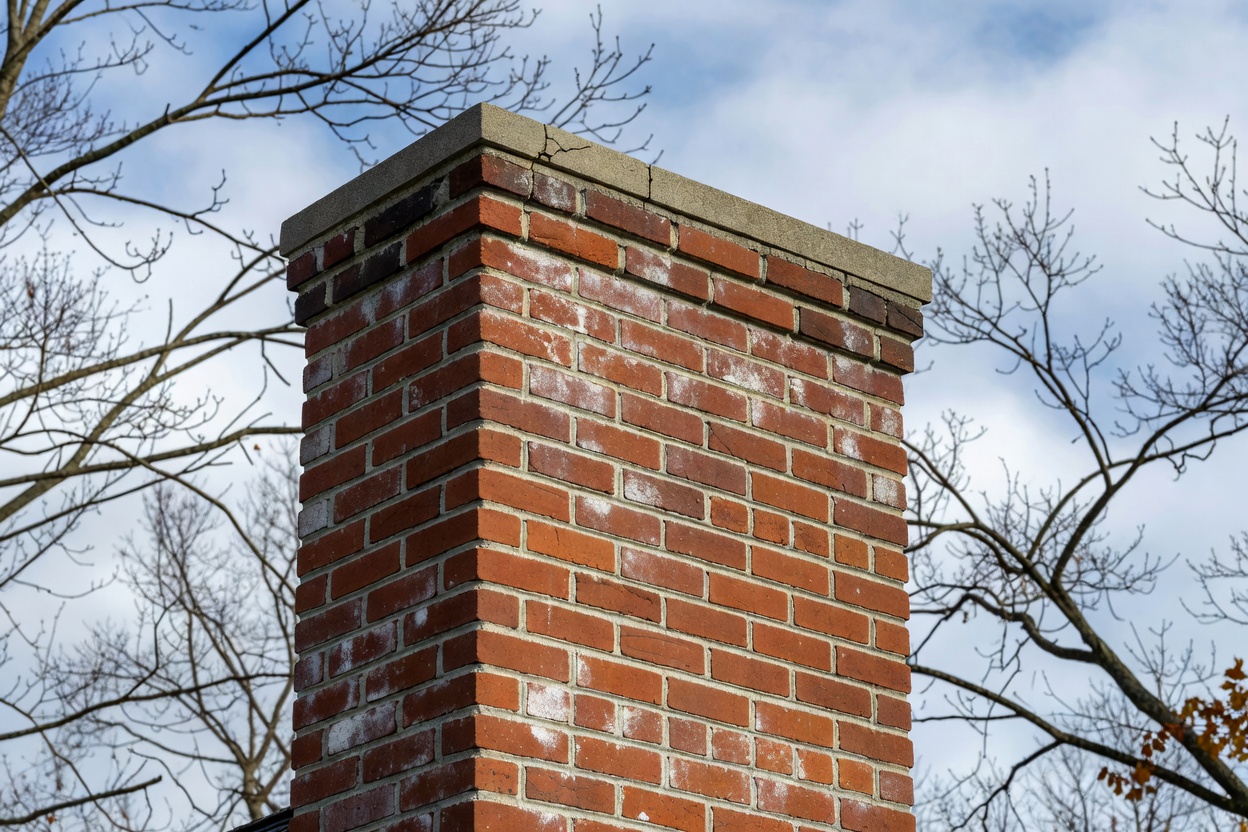
Stand at the edge of your yard and look up. A cracked crown that concrete cap at the top of the chimney lets water straight into the flue during rain. In Huntington’s winters, that water freezes, expands, and breaks mortar joints from the inside out. A new crown is a few hundred dollars. Ignoring it for two winters can mean full masonry reconstruction. Call now. This is one of the most underestimated problems we see from Garden City Park to Hicksville.
Crumbling mortar joints on the chimney exterior
Run your hand along the mortar lines when you’re near the chimney. If it crumbles or flakes easily, the joints are deteriorating. This is repointing work a repair our team handles regularly and it’s manageable early. Left alone, water infiltration weakens the entire chimney structure. Call now if more than a few joints are affected.
A loud rumbling or low roar when the fire is burning
This is the sound of a chimney fire. Not every chimney fire is a dramatic, visible event many burn inside the flue quietly while the creosote ignites. According to the U.S. Fire Administration, heating fires account for approximately 25% of all residential fires, and failure to clean chimneys is the leading contributing factor. If you hear this, let the fire die out and do not use the fireplace again. Call immediately.
Damaged or rusted damper that won’t open or close fully
A damper that sticks, won’t seal, or makes grinding noises when you operate it is both a draft problem and an energy problem. An open damper in January is like leaving a window cracked all winter. A seized damper can force carbon monoxide back into the house. You can check this yourself open the flue and look up with a flashlight. If you see daylight unevenly or the plate is visibly warped, schedule service. Call within a few weeks.
Debris — twigs, leaves, or animal nesting material — falling into the firebox
If you’re finding organic debris in your firebox, something got in. Starlings and squirrels’ nest in unprotected flues throughout spring and summer on Long Island we’ve pulled nests from chimneys in Rockville Centre, Valley Stream, and Baldwin more times than we can count. Nesting material is a fire hazard, and the animals themselves can bring parasites and block the flue completely. Call now. A chimney cap solves this permanently.
A white haze or fog visible inside the firebox when it’s cold outside
Cold air streaming visibly into the firebox means the flue is open to outside air in a way it shouldn’t be usually a failed damper seal or a gap in the liner. Beyond comfort, this is a carbon monoxide pathway. Call now.
The Seasonal Timing Argument and What Waiting Actually Costs
The honest window for booking a chimney sweep Rockville Centre NY is late summer through early October. Our schedule fills by mid-October every year as homeowners across Huntington, Mineola, Westbury, and Floral Park all realize at roughly the same time that they want a fire before Thanksgiving. Book in August or September and you have the most flexibility, the best availability, and you catch damage before cold weather locks it in.
Wait until December and you’re either burning in an uninspected chimney or waiting weeks for an appointment. The CSIA recommends chimneys be inspected at least once a year and cleaned as needed — and that recommendation exists because a lot can change in twelve months, especially in a coastal climate like ours.
Cost-wise, a standard chimney sweep in the Northeast runs $150 to $350. Creosote removal at stage two or three, liner repairs, or crown reconstruction can push totals well past $2,500 to $7,000 depending on scope. The math on early scheduling is straightforward. Catching a problem in September versus December is often the difference between a maintenance call and a structural repair.
Ready to Get This Checked Off Before Heating Season?
Our team serves homeowners throughout Huntington, Rockville Centre, Garden City, New Hyde Park, Lynbrook, Baldwin, Merrick, and across Long Island. Whether you’ve noticed one of the warning signs above or just haven’t had a sweep in more than a year, we’ll give you a straight assessment — no pressure, no upselling things you don’t need. Contact Garden City Chimney Service to schedule your inspection or chimney cleaning, ask about our chimney inspection service, or get a free estimate on any needed chimney repair work. Don’t wait until November to find out you have a problem.
Frequently Asked Questions
How often should I get a chimney sweep in Rockville Centre NY or Huntington?
-
Once a year is the standard, and it’s what both the NFPA and the CSIA formally recommend. If you burn wood regularly more than a cord per season you may need cleaning mid-season as well. Homeowners in coastal Long Island communities like Rockville Centre, Huntington, and Valley Stream should also schedule an inspection after any major storm, since wind and water damage to chimney crowns and caps is common here.
What happens if I skip getting my chimney swept for a few years?
-
Creosote builds up in stages. Stage one is light and brushes away easily. Stage three is a hard, tar-like glaze that can only be removed with chemical treatments or in some cases isn’t removable at all meaning you’re looking at relining the flue. Beyond fire risk, a neglected chimney can develop structural damage from water infiltration that compounds every winter. A $200 sweep skipped twice can reasonably result in a $3,000 to $5,000 repair bill.
Can I do a chimney sweep myself to save money?
-
You can buy brushes and do light cleaning from the firebox side, but you won’t be able to inspect the flue tiles, assess the liner condition, check the crown, or identify draft issues all of which are part of a professional sweep and inspection. For a fireplace you use regularly, DIY cleaning between professional visits is fine as supplemental maintenance. But it’s not a substitute for a certified sweep, and skipping the professional inspection is where things get missed.
Related from Garden City Chimney Service: About Contact Home – Everything You Need to Know About Garden City Chi · Finding a Trustworthy CSIA Certified Chimney Sweep Nassau County · Honest Wood-Burning Fireplace Inspection Garden City