
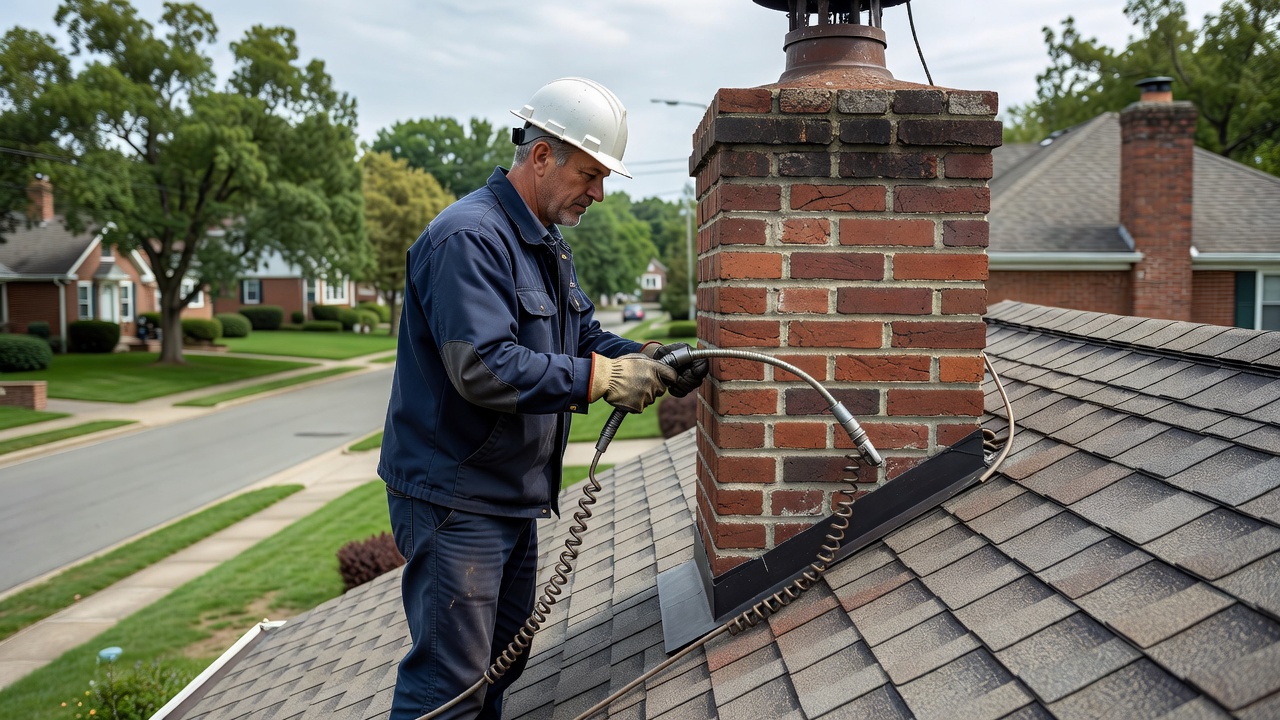
What Every Buyer Misses: Chimney Inspection Before Buying a Home Long Island — 2026 Guide for Valley Stream Residents
A couple in Valley Stream went under contract on a Cape Cod near Rockaway Avenue last spring. The general home inspector spent about four minutes looking at the fireplace flashlight into the firebox, a glance at the damper, and a note that read “fireplace present, recommend chimney inspection.” The buyers figured that meant it was probably fine. They closed. Two months later, after the first cold snap, they lit a fire and their living room filled with smoke. We got the call the next morning. A collapsed flue tile and a partially open damper caked with third-degree creosote. Repair bill: just over $3,800. The sellers had no idea either, which made it worse there was no bad faith, just a gap that nobody closed.
That gap is the chimney inspection before buying a home Long Island, and it gets skipped constantly. This piece is about what buyers and their agents consistently miss, and what you can actually see, hear, or smell that tells you something is wrong before you hand over your earnest money.
Why a General Home Inspection Is Not Enough
General home inspectors follow ASHI or InterNACHI standards, and those standards do not require a camera inspection of the flue, a creosote measurement, or an evaluation of liner integrity. What they do is visual and limited. The NFPA’s Standard 211 states that chimneys, fireplaces, and vents shall be inspected at least once a year for soundness, freedom from deposits, and correct clearances and that a Level 2 inspection is specifically required whenever a property changes hands. That means a dedicated chimney professional, not a general inspector with a flashlight.
In Nassau County, we see this mistake most often in older housing stock the post-war Capes and colonials that are everywhere in Valley Stream, Lynbrook, Malverne, and Baldwin. These homes are 60 to 80 years old. The chimneys have lived a long life, and it shows. Here is what to look for before you get to the closing table.
Warning Signs You Can Actually See, Hear, or Smell
White Staining on the Exterior Brick
That chalky white residue is called efflorescence. It means water is moving through the masonry, dissolving salts, and depositing them on the surface as it evaporates. One season of efflorescence is a caution sign. Years of it means the mortar joints are compromised and water is likely getting into the flue. Long Island’s coastal climate salt air, humidity, and hard freeze-thaw cycles accelerates this faster than most inland regions. Call a pro now. Don’t wait until you own it.
Cracked or Missing Mortar Between Bricks
Stand on the sidewalk and look at the chimney stack above the roofline. Can you see gaps between courses? Dark, recessed lines where mortar has shrunk or fallen out? This is called spalling or joint failure. On a 1950s house in Valley Stream or New Hyde Park, this is common and often ignored. Once water enters those joints and freezes, you get lateral cracking that spreads fast. Call a pro now. Tuckpointing costs a fraction of a full rebuild.
A Rusted or Missing Chimney Cap
Walk around the yard and look up. Is there a metal cap on the flue opening? If there isn’t one, every rain and every animal has had unobstructed access to the flue for however long the cap has been gone. We have pulled out bird nests, squirrel caches, and enough debris to completely block airflow in homes throughout Rockville Centre and Westbury. A missing cap is not just a small fix it tells you the chimney has likely had years of moisture intrusion. Call a pro now.
Dark Staining Around the Firebox Opening
Smoke stains on the facing above the firebox opening the decorative surround mean the fireplace has been smoking back into the room. That can indicate a blocked flue, an undersized flue for the firebox, a closed or broken damper, or negative pressure in the house. Each cause has a different fix, and some are expensive. Call a pro now and get clarity before the purchase.
A Burning or Musty Odor Coming From the Fireplace
Open the damper and get close to the firebox opening. A sharp, acrid smell usually means creosote buildup. A damp, earthy smell often means water intrusion and possibly mold inside the flue. According to the CSIA, creosote a byproduct of wood combustion is highly flammable, and even a thin layer of third-degree creosote can ignite at temperatures as low as 451°F. Sellers often don’t notice these smells because they’ve been living with them. You’re smelling it fresh. Trust your nose. Call a pro now.
Visible Cracks in the Firebox or Smoke Chamber
Lean into the firebox and look at the rear and side walls. Hairline cracks in the refractory panels are normal wear. Cracks wider than a credit card, or cracks that have traveled into mortar joints, are not. Those are potential pathways for combustion gases and heat to reach framing materials. In older homes in Freeport or Merrick, we find this regularly in fireplaces that were used heavily and never serviced. Call a pro now.
A Rusted, Stuck, or Missing Damper
Reach up into the throat of the firebox carefully and feel for the damper. Can you move it? Does it open fully? A damper that won’t open means no draft. A damper that won’t close means conditioned air pours out of your house all winter. Replacement is straightforward, but a stuck damper that has been forced repeatedly can crack the smoke shelf and cause a chain of bigger problems. Keep an eye on it if it moves but sticks. Call a pro now if it won’t move at all or is visibly corroded through.
The Seller Has No Service Records
This is not something you see it’s something you ask. Request documentation of any chimney cleaning or inspection in the past three years. Most sellers in Valley Stream, Hempstead, and Uniondale won’t have any. That’s not automatically disqualifying, but it means the chimney has been operating without any professional oversight, and the risk profile goes up significantly. The U.S. Fire Administration reports that failure to clean chimneys is the leading contributing factor in home heating fires — and that heating fires account for roughly 25% of all residential fires. No records means no baseline. Make the inspection a contract contingency.
What a Proper Pre-Purchase Inspection Covers
A Level 2 chimney inspection — the standard required at sale — uses a video camera to examine the full length of the flue liner. It checks for cracks in the liner, blockages, proper clearances at the attic and roof, and the condition of the firebox, smoke chamber, and damper. It takes roughly 45 minutes to an hour. The average cost for this service on Long Island in 2026 is in the $200 to $350 range, which is a fraction of what a liner repair costs. According to HomeAdvisor and Angi cost data, chimney relining alone runs $2,500 to $7,000 or more depending on flue length and material. Spending $250 before closing to know what you’re getting into is not optional — it’s basic due diligence.
If issues turn up, you have options: negotiate a repair credit, ask the seller to remedy before closing, or walk away. None of those options exist if you find the problem after you’ve signed the deed.
Schedule Your Pre-Purchase Inspection Before Closing
If you’re under contract on a home in Valley Stream, Malverne, Garden City, or anywhere else in Nassau or western Suffolk County, our team can schedule a Level 2 chimney inspection quickly — we understand real estate timelines. We’ll give you a written report with photos that you can share with your agent and attorney. Our chimney inspection service is built around exactly this scenario, and if repairs are needed, you can explore our chimney repair options with a full picture of the scope and cost. Call us or request a free estimate online — we’re local, we know these houses, and we’ll tell you straight what we find.
Frequently Asked Questions: Chimney Inspection Before Buying a Home Long Island
Is a chimney inspection required before buying a home in New York?
-
There is no state law in New York that legally mandates a chimney inspection as a condition of closing, but the NFPA’s Standard 211 specifies that a Level 2 inspection is required whenever a home changes ownership. More practically, your mortgage lender or homeowner’s insurance carrier may flag an uninspected chimney — and any chimney defect discovered after closing becomes your expense alone. For buyers in Valley Stream and across Nassau County, making the inspection a contract contingency is the safest approach.
How much does a pre-purchase chimney inspection cost on Long Island in 2026?
-
A Level 2 chimney inspection — which includes a video camera scan of the flue — typically runs between $200 and $350 on Long Island in 2026. Basic Level 1 visual inspections are less expensive but don’t provide the flue imaging that reveals liner cracks, blockages, or clearance issues. Given that liner repairs can run $2,500 to $7,000 or more, the cost of a proper Level 2 inspection is minimal compared to the risk of going in blind.
What is the difference between a Level 1 and Level 2 chimney inspection?
-
A Level 1 inspection is a visual check of the accessible parts of the chimney — the firebox, damper, and exterior — without camera equipment. It’s appropriate for a homeowner who uses their fireplace regularly and has had no changes to the system. A Level 2 inspection adds a video scan of the full flue liner and is required by the NFPA whenever a home is sold. For anyone doing a chimney inspection before buying a home on Long Island, Level 2 is the correct and appropriate standard — not a premium upgrade.
Related from Garden City Chimney Service: About Contact Home – Everything You Need to Know About Garden City Chi · Reliable and Safe · Reliable About Contact Home Services
Pingback: Honest Chimney Inspection Long Island: 2026 Cost Guide for Lynbrook Residents – Garden City Chimney Service
Pingback: Critical Chimney Relining Long Island NY: 2026 Timing Guide for Valley Stream Residents – Garden City Chimney Service
Pingback: What Merrick Homeowners Keep Getting Wrong About an Annual Chimney Inspection Huntington NY Contractors Actually Recommend – Garden City Chimney Service
Pingback: Smart Chimney Rebuilding Long Island: 2026 Guide for Plainview Residents – Garden City Chimney Service
Pingback: Straightforward Creosote Removal Long Island Chimney: 2026 Cost Guide for Valley Stream Residents – Garden City Chimney Service