
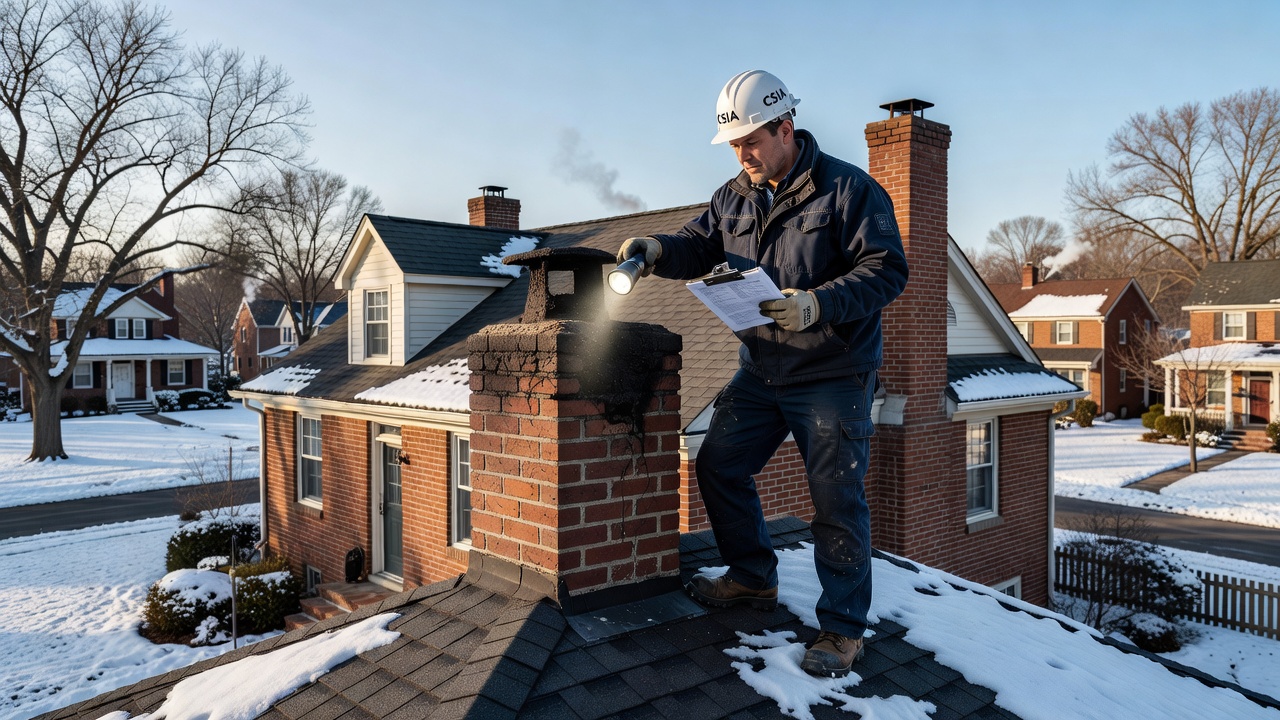
What Merrick Homeowners Keep Getting Wrong About an Annual Chimney Inspection Huntington NY Contractors Actually Recommend
Most chimney fires don’t start because a homeowner was careless. They start because someone believed something that sounded reasonable but wasn’t true. We hear these misconceptions constantly from Merrick to Huntington, from Rockville Centre to Bellmore and clearing them up is honestly one of the most useful things we can do before a homeowner ever picks up the phone to schedule an annual chimney inspection. Huntington NY gets a lot of attention from inspection companies, but the same misinformation circulates all across Long Island, and it puts real homes at real risk.
A customer in Merrick called us last January after a chimney sweep from a company she found online told her everything looked fine no cleaning needed, no concerns, in and out in twenty minutes. She felt uneasy about how fast it went, so she called us for a second opinion. We found a stage-two creosote buildup in her flue and a cracked liner that had been there long enough to show staining on the surrounding masonry. The first company wasn’t lying, exactly. They just weren’t qualified to see what needed to be seen. That’s the kind of thing that comes from hiring without asking the right questions.
The Idea That a Quick Visual Check Is Good Enough
This one is genuinely dangerous. A lot of homeowners assume that if a technician shines a flashlight up the flue and doesn’t see anything alarming, the chimney is fine. But a proper annual chimney inspection involves more than line-of-sight visibility from the firebox. The NFPA Standard 211 requires that chimneys, fireplaces, and vents be inspected at least once a year for soundness, freedom from deposits, and correct clearances. That means evaluating the liner, the smoke chamber, the damper, the crown, and the exterior masonry none of which you can fully assess from a flashlight glance at the hearth.
The reason this myth persists is partly that a quick look gives everyone a false sense of completion. The homeowner feels checked off. The technician moves on to the next job. And nothing bad happens immediately, which seems to confirm the approach. The damage is slow and cumulative, and by the time there’s a symptom a smoky smell in the living room, a stain on the ceiling near the flue, a carbon monoxide detector going off the underlying problem has been developing for seasons.
Thinking Credentials Are All More or Less the Same
Not every company calling itself a chimney service has the same training or accountability. The Chimney Safety Institute of America certifies sweeps through a rigorous examination process, and that CSIA credential means a technician has demonstrated knowledge of chimney systems, combustion byproducts, and applicable safety standards. There are companies operating on Long Island in Huntington, Hempstead, Valley Stream, and elsewhere that have no verifiable certifications at all. They exist, they advertise, and they show up.
When you’re vetting a contractor, ask directly: is the person coming to my home CSIA-certified? Ask for the credential number if you want to be thorough the CSIA maintains a searchable directory. Also ask whether they carry liability insurance and workers’ compensation coverage. Chimney work involves ladders, roofs, and equipment. If someone gets hurt on your property and the company isn’t properly insured, you may have exposure. These are basic questions that any legitimate contractor will answer without hesitation. Hesitation itself is a red flag.
Assuming a Low Price Means a Fair Deal
Pricing matters, especially for homeowners in Merrick and the surrounding towns who are trying to budget responsibly. But the discount chimney inspection advertised for $49 or $59 is almost always a loss-leader that exists to get a technician into your home. The actual inspection if it meets any meaningful standard should run between $150 and $350 in the northeastern United States, based on current industry cost data. If you’re quoted something well below that range, it’s worth asking what exactly is included and what’s not.
The low-price model often works like this: the inspection itself is priced to get in the door, and then upsells follow. Sometimes those upsells are legitimate if your flue liner genuinely needs relining, that’s a $2,500 to $7,000 project depending on flue length and material, and it’s worth doing. But the recommendation should come from honest findings, not from a business model that requires it. The difference between a trustworthy contractor and a predatory one is whether the upsell is driven by what they found or by what they need to sell. Ask for the inspection report in writing. A contractor who won’t give you written documentation of findings is telling you something important about how they operate.
Believing Once Every Few Years Is Often Enough
We hear this in Merrick and across Nassau County regularly: “We barely use the fireplace, so we skip a year.” The CSIA recommends that chimneys, fireplaces, and vents be inspected at least once a year and cleaned as needed and that guidance applies even to chimneys that see light use. Infrequent use doesn’t eliminate creosote; it often changes how it deposits. Low-temperature fires, which are common when people burn small amounts of wood casually, produce more condensation inside the flue and can actually accelerate creosote accumulation relative to the heat generated. According to the U.S. Fire Administration, failure to clean chimneys is the leading contributing factor in home heating fires, which account for roughly 25% of all residential fires.
Long Island’s coastal climate adds another layer. The freeze-thaw cycles and salt air that Merrick homeowners deal with every winter accelerate mortar joint deterioration and masonry damage faster than inland regions. A chimney that looked structurally solid eighteen months ago may have new spalling, cracks, or water infiltration after a wet fall and hard winter. An annual inspection catches that before it becomes an expensive repair or our chimney repair options can address it when it does, before it compromises the structure.
Thinking Any General Contractor Can Do This Work
Chimney inspection and cleaning is a specialty trade. A general contractor who handles roofing, siding, and masonry may be excellent at all of those things and still lack the training to accurately assess a flue liner, identify third-degree creosote, or recognize the signs of a failing smoke chamber. Creosote in its third stage can ignite at temperatures as low as 451°F and burns at intensities that can crack clay tile liners and damage surrounding masonry within a single burn. Identifying it requires knowing what it looks like which is genuinely different from first- and second-degree deposits and knowing how to respond.
If you’re in Huntington, Hicksville, Great Neck, or anywhere else on Long Island and a general contractor offers to inspect your chimney as part of a broader home service package, it’s reasonable to ask about their specific chimney credentials. If they don’t have any, schedule a dedicated chimney inspection through a certified sweep separately. Our chimney inspection service is designed specifically around that standard thorough, documented, and performed by technicians who know what they’re looking at.
If you’re in Merrick or anywhere across Nassau and Suffolk County and you’re not sure whether your last inspection actually met the standard it should have, we’re glad to give you a straight answer. Reach out to the team at Garden City Chimney Service to schedule your annual chimney inspection no pressure, no guesswork, and no surprises hidden in the fine print.
Frequently Asked Questions
How do I know if a chimney inspector is actually qualified to work in Huntington NY or on Long Island?
Look for CSIA certification the Chimney Safety Institute of America maintains a public directory where you can verify a technician’s credentials by name or certification number. Beyond that, any reputable contractor should carry liability insurance and workers’ compensation and should be willing to provide written documentation of their findings after the inspection. If a company resists any of those requests, that’s a clear signal to keep looking.
What should an annual chimney inspection actually cover?
A standard Level 1 inspection which is the minimum recommended for a chimney in continued normal use covers the accessible portions of the chimney’s exterior and interior, including the firebox, damper, smoke chamber, flue liner, crown, and cap. The technician should check for obstructions, deposits, and structural soundness. If there’s been a change in the heating system, a chimney fire, or a real estate transaction involved, a Level 2 inspection with camera equipment is more appropriate. Any honest contractor will explain the difference and recommend the right level for your situation.
Is an annual chimney inspection worth it if I only use my fireplace a handful of times each year?
Yes, and the reasoning is straightforward. Infrequent use doesn’t prevent creosote buildup low-temperature fires can actually produce heavier deposits relative to the heat generated. More importantly, the structural integrity of the chimney mortar joints, liner condition, crown, cap, and flashing are affected by weather year-round regardless of how often you light a fire. On Long Island, where salt air and freeze-thaw cycles accelerate masonry deterioration, skipping even one year means potentially missing damage that gets significantly more expensive to repair over time.
Related from Garden City Chimney Service: About Contact Home – Everything You Need to Know About Garden City Chi · What Every Buyer Misses · Honest Chimney Inspection Long Island