
Honest Chimney Repair Hempstead NY: 2026 Guide for Hempstead Residents
A homeowner on Peninsula Boulevard in Hempstead called us last spring convinced he had a minor pointing job he could knock out himself over a weekend. He had watched a few videos, bought a bag of mortar mix from a hardware store, and already had his ladder out. By the time we came for the inspection, he had packed the wrong mortar into three courses of brick and accidentally sealed a hairline crack that was actually letting water into the flue. The repair ended up costing more than it would have if he had called us first. We don’t tell that story to make anyone feel bad we tell it because it happens constantly, and chimney repair Hempstead NY homeowners deserve a straight answer about what they can reasonably handle and what they genuinely cannot.
There is a lot of well-meaning but incorrect information floating around about chimney work. Some of it comes from home improvement culture that treats every repair as a weekend project. Some of it comes from assuming that because you can see the problem, fixing it must be simple. Here is what we actually see in the field.
The Mortar Problem Is Almost Never What It Looks Like
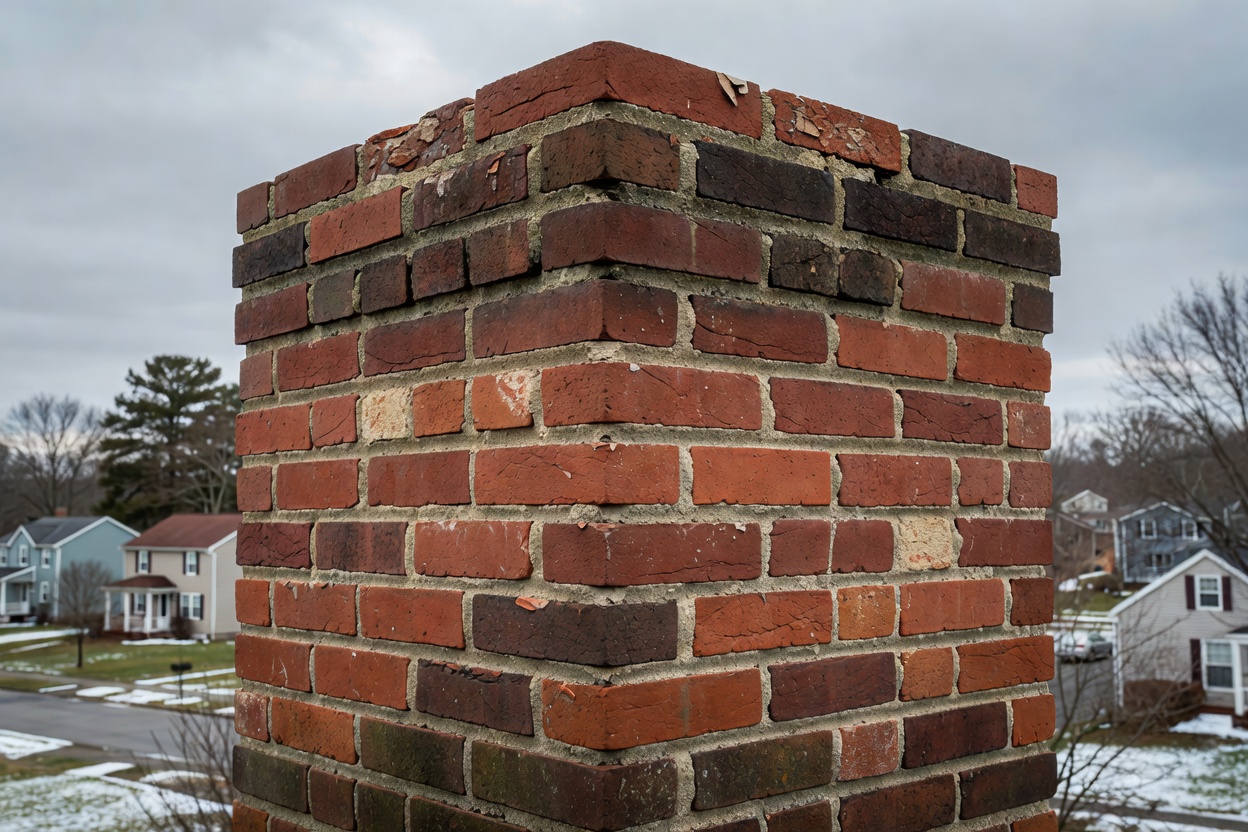
The most common misconception we run into is that crumbling mortar joints are a cosmetic issue. Homeowners in Hempstead, Uniondale, and Garden City Park point to a few deteriorated joints and figure a tube of caulk or a bag of pre-mixed mortar from the hardware store will do the job. The problem is that chimneys require specific refractory or type-S mortar depending on the location the wrong product will shrink, crack, and fail within one heating season. Worse, it can trap moisture behind a sealed surface, which then freezes during our Long Island winters and pops the surrounding brick apart. That freeze-thaw cycle is genuinely aggressive here. Long Island’s coastal climate accelerates mortar joint deterioration and chimney masonry damage faster than inland regions, which makes what looks like minor spalling a more urgent problem than it appears.
Tuckpointing done correctly means grinding out the old joint to a consistent depth before packing new mortar in layers. It requires the right tools, the right mix, and an understanding of how that section of the chimney handles heat and moisture. A surface-level patch without proper prep will not bond correctly and will separate quickly. We see this every fall when homeowners want to start using their fireplace again and discover that last summer’s DIY repair has already come loose.
A Leaking Chimney Is Rarely Just a Cap Problem
Another thing homeowners frequently get wrong is believing that if water is getting in, the chimney cap is to blame and swapping it out will solve everything. Caps do fail and we replace them regularly in Rockville Centre, Valley Stream, and Merrick but they are one of several potential entry points. The flashing where the chimney meets the roofline is often the real culprit, especially on homes that have had roof work done without a chimney specialist present. The crown, which is the concrete or mortar slab that covers the top of the chimney structure itself, develops cracks that channel water directly into the masonry. And the brick itself becomes porous over time, absorbing moisture across the entire exposed surface.
Replacing a cap is something a careful homeowner can sometimes manage safely if the chimney is accessible and the new cap is the correct size. Everything else flashing repair, crown coating, waterproofing treatment requires professional work. Flashing in particular is easy to get wrong. We have seen improper DIY flashing repairs in Freeport and Baldwin that pulled away from the chimney during the first significant rain because the homeowner used roofing caulk instead of proper step flashing and counter-flashing. Our chimney inspection service typically identifies these issues before they become structural problems.
Cracks in the Firebox Are Not a Painting Project
Inside the firebox, homeowners often notice cracks in the refractory panels or in the mortar between firebricks and assume a coating of furnace cement or high-temperature paint will handle it. It will not. Refractory panels exist to protect the masonry behind them from direct flame exposure. When they crack through, heat is reaching material it was never designed to contact. A firebox with compromised refractory components is genuinely a safety concern this is not an area where we want people doing trial-and-error repairs on their own.
According to the U.S. Fire Administration, heating fires account for approximately 25 percent of all residential fires, and failure to clean and maintain chimneys is the leading contributing factor in home heating fires. That statistic is relevant here because firebox deterioration and creosote buildup often develop together. A damaged firebox allows heat transfer and sparks to reach areas they should not, while accumulated creosote creates fuel for those sparks. Refractory panel replacement is a straightforward job for our technicians, but it is not one we recommend homeowners attempt given the precision required and the safety stakes involved.
Liner Issues Are Invisible Until They Are Not
Here is a misconception that surprises people: many homeowners in Hempstead and Mineola who have been using their fireplace for years assume their liner is fine because nothing has gone wrong yet. Liner damage cracks, gaps, spalling does not announce itself with obvious symptoms until conditions are right for a problem. Carbon monoxide can migrate through cracked liner joints into living spaces. Chimney fires can spread through gaps in damaged clay tile liners. The NFPA Standard 211 states that chimneys, fireplaces, and vents shall be inspected at least once a year for soundness, freedom from deposits, and correct clearances. That standard exists because liner integrity is genuinely difficult to assess without a camera inspection.
We run camera inspections routinely throughout Nassau County, and it is not unusual to find liner damage in homes where the owner had no indication anything was wrong. Liner repair or relining is not a DIY project under any interpretation. Depending on flue length and liner material, relining projects typically range from $2,500 to $7,000 or more a real investment, but one that reflects both the labor involved and the safety function the liner serves.
What You Actually Can Do Yourself
We want to be fair here. There are things homeowners can reasonably handle. Clearing debris from around the chimney base, keeping the area in front of the firebox clean, burning properly seasoned hardwood to reduce creosote buildup, checking that the damper opens and closes smooth these are reasonable maintenance habits. If a chimney cap is clearly sitting loose and you can safely access the top of your chimney, reseating or replacing a standard cap is manageable for someone comfortable on a roof. Visual inspection of the exterior masonry from the ground is also worth doing seasonally, especially after a hard winter.
Everything structural anything involving mortar, brick, flashing, the crown, the liner, or the firebox is work that carries real consequences if done incorrectly. That is not a sales pitch; it is what we see in Westbury, Lynbrook, and New Hyde Park every season when we get called in after a repair attempt made things worse.
Schedule an Honest Assessment
If you have questions about chimney repair in Hempstead or anywhere across Nassau County, we are glad to take a look and tell you plainly what we find. Our team serves Hempstead, Garden City, Floral Park, Bellmore, Massapequa, Hicksville, Great Neck, and the communities in between. We can help you understand what genuinely needs professional attention and what you can monitor on your own. Reach out to Garden City Chimney Service to schedule an inspection or get a straightforward estimate no pressure, no upsell, just an honest answer from a local team that works in these homes every day.
Frequently Asked Questions About Chimney Repair in Hempstead NY
How much does chimney repair cost in Hempstead, NY?
-
Cost depends entirely on what needs to be done. A basic tuckpointing job on a few deteriorated mortar joints may run $300 to $700. Crown repair and waterproofing treatments typically fall in the $400 to $900 range. Flashing repair, depending on how much of it needs replacing, can be $500 to $1,500. Liner relining is the most significant investment, generally ranging from $2,500 to $7,000 or more based on flue length and liner material. We recommend scheduling a camera inspection first so you know exactly what you are dealing with before committing to any repair.
Can I repair chimney mortar myself on Long Island?
-
For very minor, surface-level joint deterioration on an exterior chimney section, some homeowners do attempt DIY tuckpointing. The challenge is using the correct mortar type chimneys require type-S or refractory mortar depending on location, not standard construction mortar or caulk. Improper materials shrink and fail quickly, and Long Island’s freeze-thaw cycles are hard on any subpar repair. If the deterioration covers more than a small area or involves the joints near the firebox or crown, professional repair is the right call.
How do I know if my chimney liner needs to be replaced?
-
Honestly, you usually cannot tell without a camera inspection. Liner cracks and gaps are interior damage that does not produce obvious symptoms until a problem develops carbon monoxide migration or a chimney fire event. Warning signs that suggest liner problems include unusual smoke behavior, a persistent smoky smell in the house even when the fireplace is not in use, or visible white staining (efflorescence) on the exterior of the chimney. The NFPA recommends annual inspections specifically because liner integrity is not something you can assess by eye from outside the flue.
Related from Garden City Chimney Service: About Contact Home – Everything You Need to Know About Garden City Chi · Honest Guide to Chimney Cap Installation Massapequa NY · Reliable Chimney Mortar Repair Smithtown NY